
How To Catch Permit on the Offshore Wrecks
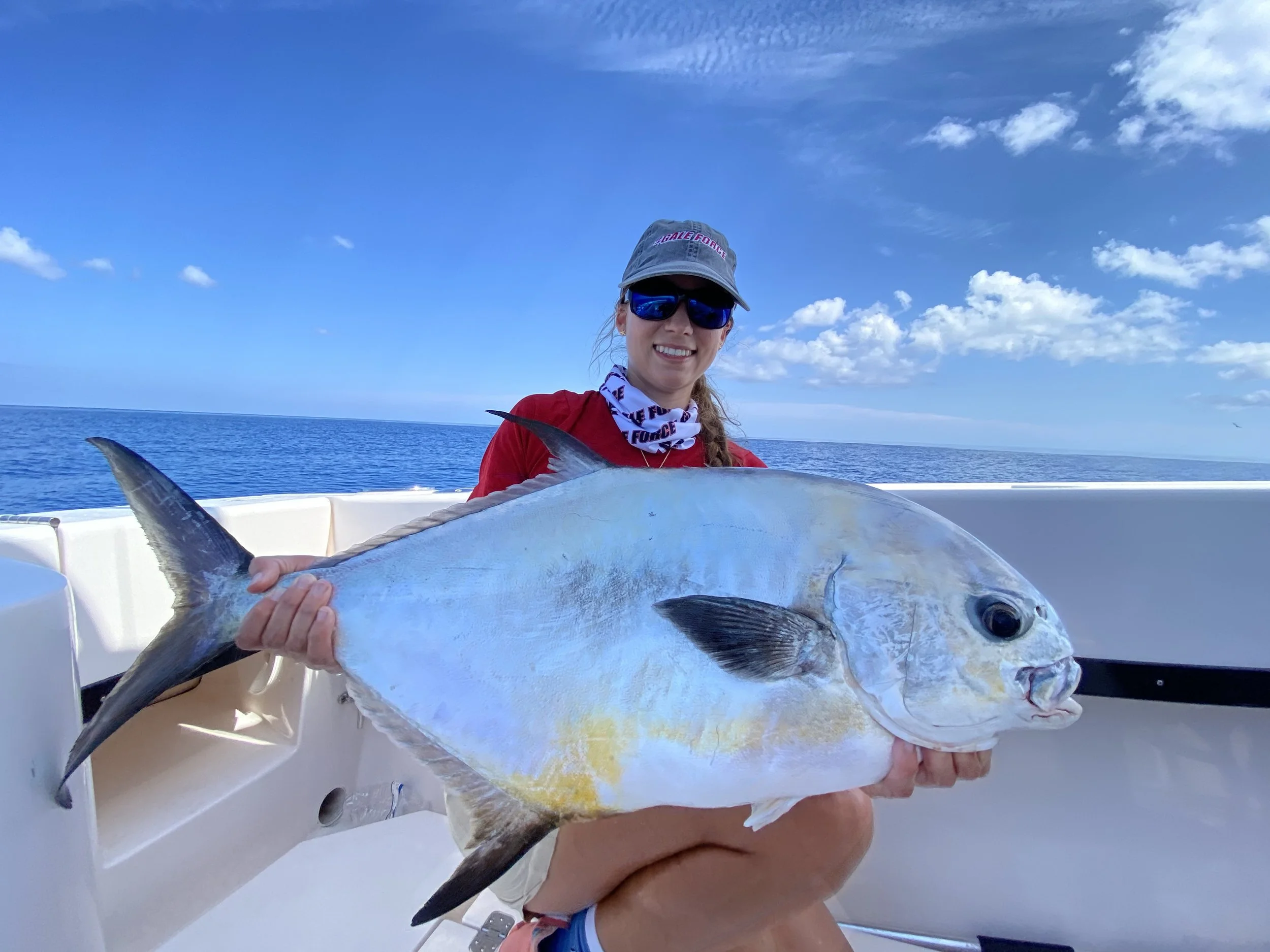
Every spring in South Florida, the permit leave the inshore flats and move offshore to the reefs and wrecks to spawn. This seasonal migration creates one of the best opportunities of the year to target these notoriously picky fish, with April usually being the most productive month.
On flat calm days during the spawn, you can sometimes see massive schools of permit swimming just beneath the surface around wrecks in 70 to 100 feet of water. From above, they look like giant yellow blobs, and when you see fish grouped up like this you know you are set up on a productive wreck. While we like to focus on wrecks in that 70 to 100 foot range, permit can be found shallower or deeper, we have even caught them while tarpon fishing bridges or while yellowtailing on the reef.
When we arrive at a wreck, the first thing we do is slow everything down and take a short drift to determine the direction and speed of the current. While you can often mark schools of permit on your transducer, you do not have to see them on the machine to know they are there. If the conditions are right during the spawn, they are usually around the wreck.
Once we understand the drift, we idle a few hundred feet up current before dropping our bait, a live crab on a ¼ to ½ ounce jig with a 30 pound fluorocarbon leader. When hooking the crab, gently push the hook through the corner of the shell and take your time. If you force the hook too quickly, you can crack the shell and the crab will die much faster. Slowly wiggle the hook from underneath the shell and out through the top so it stays alive and swims naturally. Then drop your bait over the side of the boat and let the crab drift naturally toward the structure with the flow of the current. We like to lightly pinch the line between our fingers so we can feel every movement as the crab drifts back toward the wreck.
A permit bite is quick and subtle. They crush crabs instantly. The moment you feel that bite, close the bail and reel fast to come tight. Permit are powerful and built for speed. We try to get them to the boat efficiently to reduce the chances of sharks claiming the fish. Once landed, handle them carefully. Never put your fingers in the gills. Support the body, take a quick photo, and send them back down strong. In South Florida, the spawning season is typically closed for harvest, so most fish are released.